
Anti-Ageing & Healthy Longevity
Exploring the science of cellular energy, tissue resilience and healthy ageing.
Ageing begins at the cellular level. How cells generate energy, respond to stress and maintain their surrounding tissues offers a window into the biology of lifelong function.
Discover research compounds that help scientists investigate these processes—from mitochondrial signalling and energy metabolism to copper-peptide activity in skin and connective tissue.

Cellular Energy
Investigating how mitochondria generate energy and how their function changes with age and biological stress.
Research in Focus
SS-31
A targeted approach to mitochondrial research.
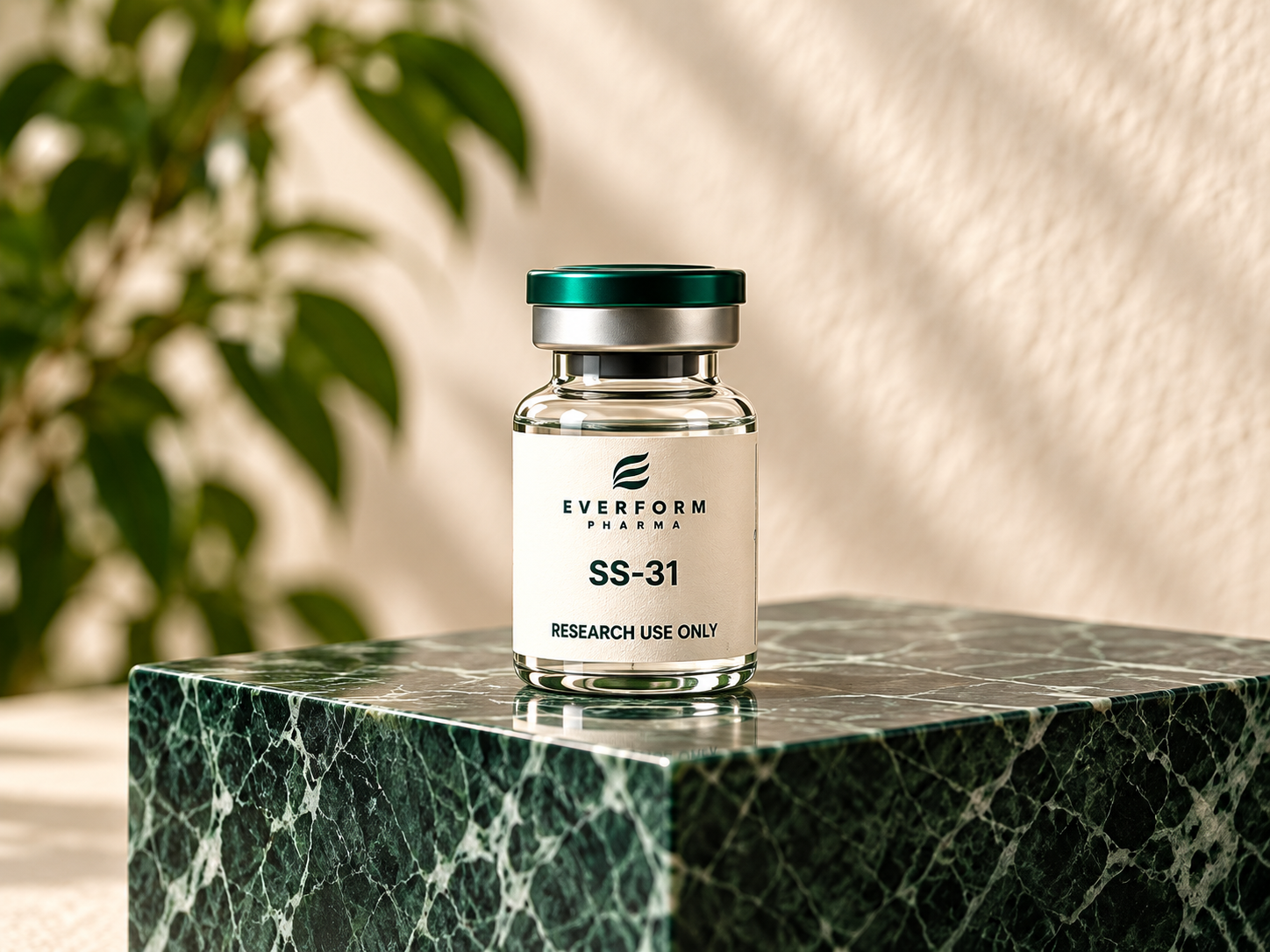
SS-31, also known as elamipretide, is a mitochondria-targeted peptide investigated for its interaction with cardiolipin, a lipid within the inner mitochondrial membrane.
This makes it a focused tool for exploring the relationship between membrane organisation, energy production and mitochondrial responses to stress. For researchers studying cellular energetics, SS-31 brings attention to the structures that help the energy-producing machinery function.
Findings from specific pharmaceutical formulations and clinical populations do not establish equivalent effects for research-use materials.

The Science Behind Healthy Ageing

Metabolic Signalling
Exploring the pathways that coordinate nutrient sensing, energy use and cellular
GHK-Cu
A small peptide with a broad research horizon.
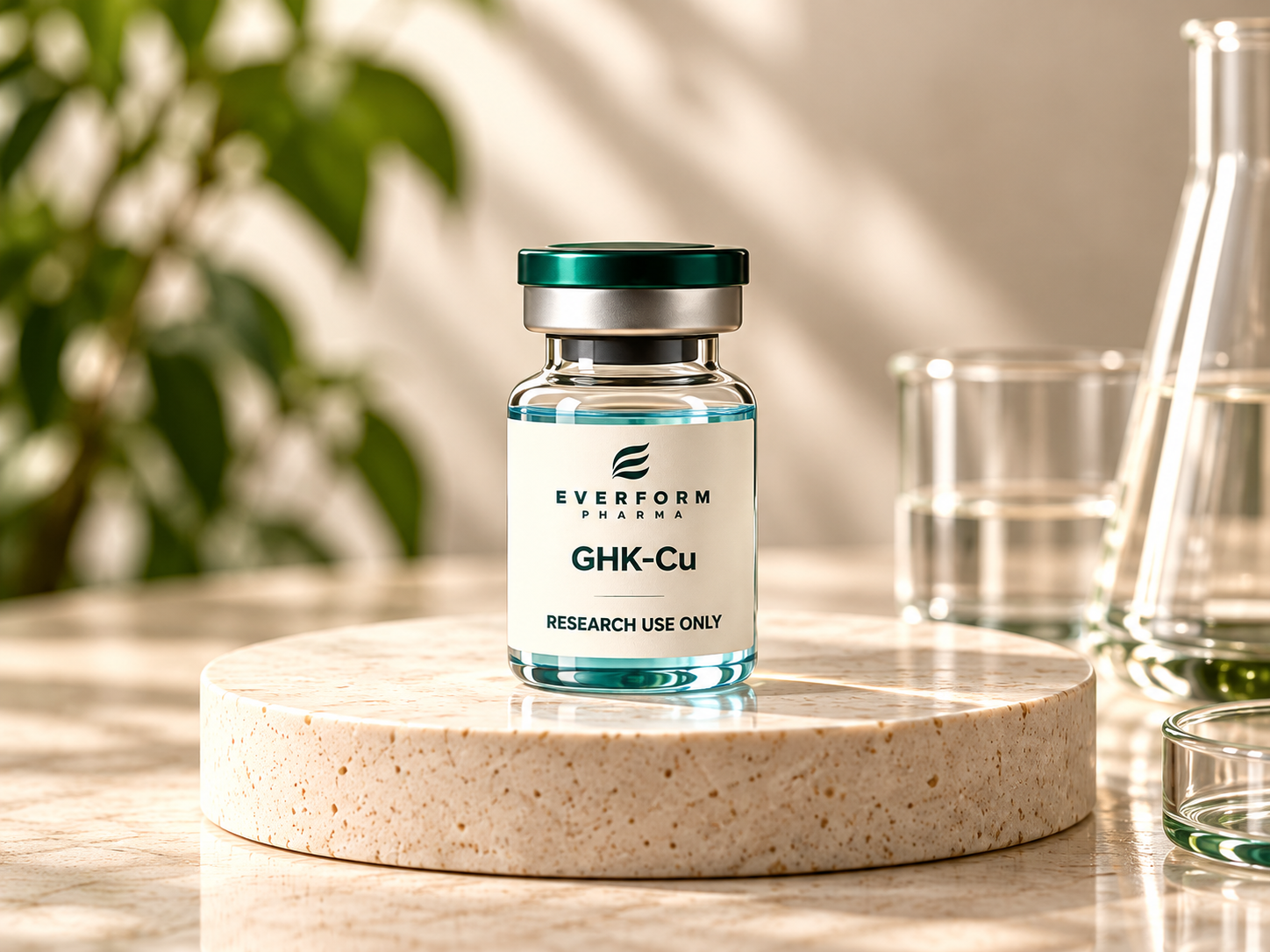
GHK-Cu is a copper-binding tripeptide that connects skin biology with the study of tissue maintenance and remodelling. Its research appeal spans extracellular matrix regulation, collagen-related processes and cellular responses to injury.
For researchers interested in how tissues maintain their structure over time, GHK-Cu offers a focus for investigating the interaction between copper signalling, cellular activity and the tissue environment.
Evidence from topical formulations should be assessed separately from research involving other preparations or routes.
Skin & Tissue Biology
Examining the processes involved in extracellular matrix remodelling, tissue maintenance and cellular responses to injury.
Four Key Peptides
Distinct and different acting pathways to combat aging. New questions to explore.

Cellular Resilience
Understanding how cells respond to stress—and distinguishing changes in laboratory markers from meaningful improvements in biological function.
MOTS-c
Investigating the conversation between mitochondria and metabolism.
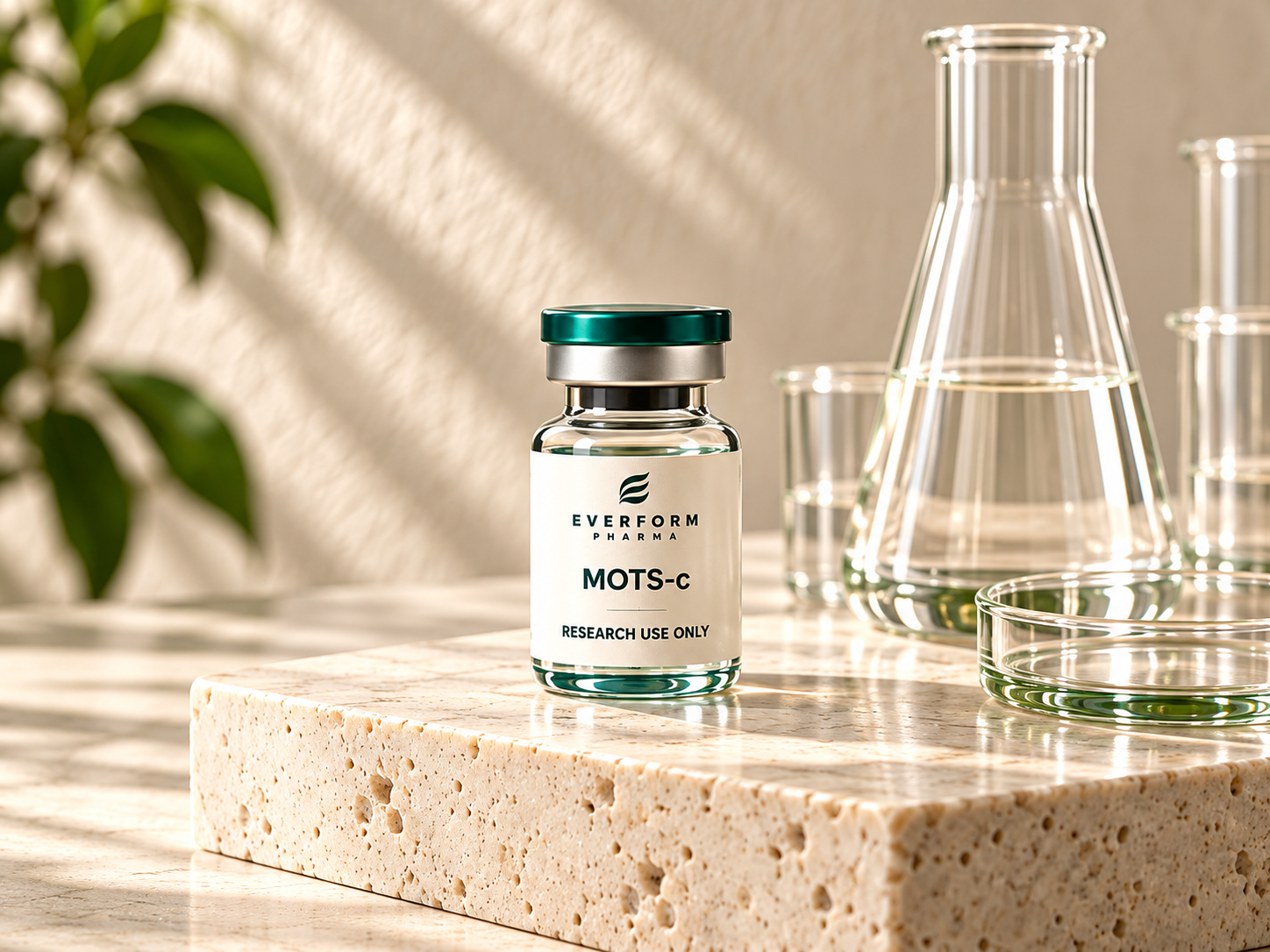
MOTS-c is a mitochondria-derived peptide that offers a distinctive perspective on cellular communication. Researchers investigate its relationship with metabolic regulation, stress responses and exercise-related adaptation.
Its appeal lies in exploring how mitochondrial signals influence processes beyond energy production—including how cells respond to changing energy demands. Animal intervention studies and observations of naturally occurring MOTS-c in humans provide different types of evidence; they should not be treated as interchangeable.
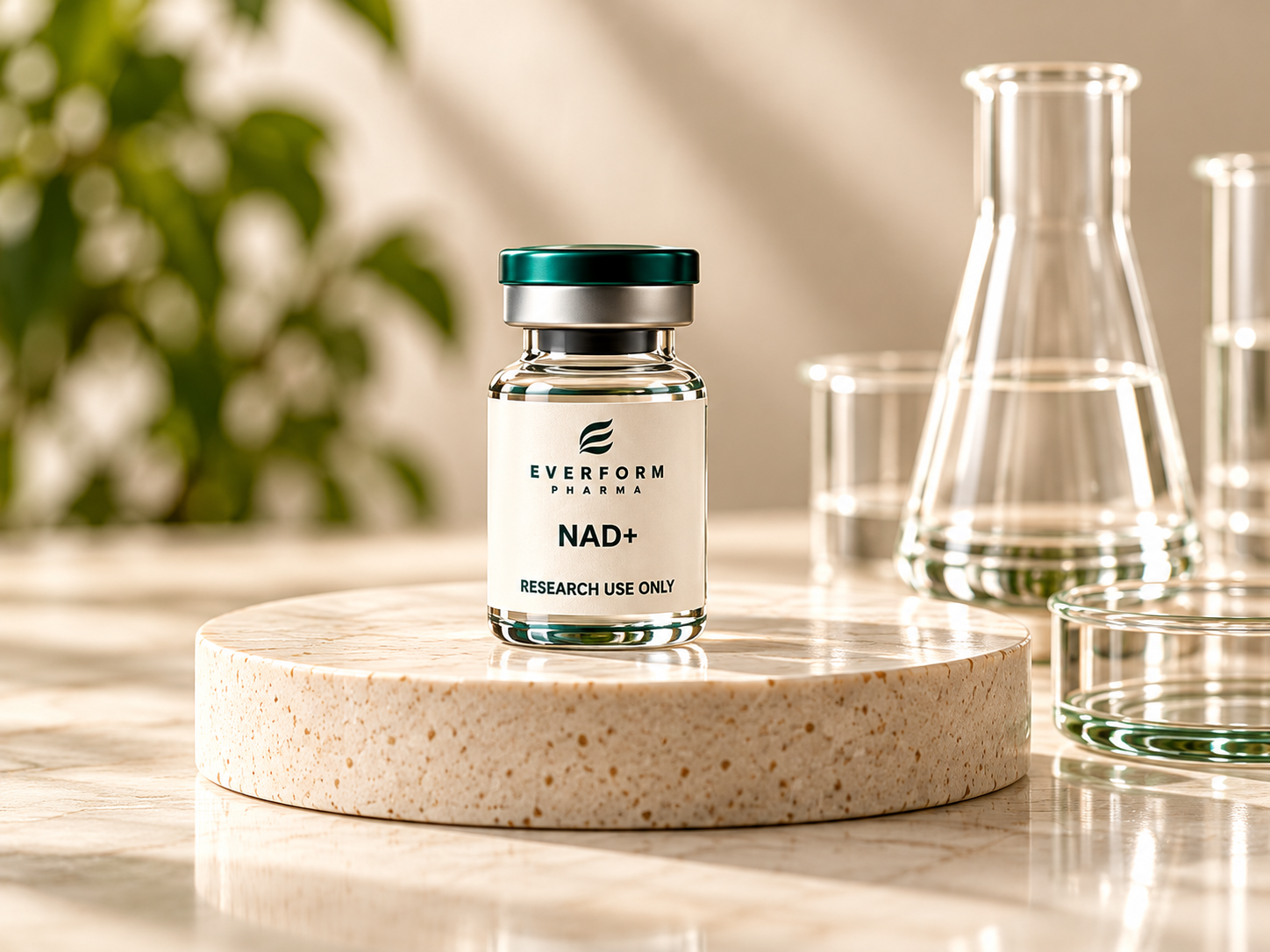
NAD+
At the centre of cellular energy research.
NAD+ is a coenzyme—not a peptide—with a fundamental role in cellular metabolism. It participates in reactions that transfer energy and serves as a substrate for enzymes involved in DNA-damage responses and cellular regulation.
For researchers exploring ageing biology, NAD+ connects several areas of investigation: energy metabolism, cellular stress and the mechanisms that maintain biological function.
Its essential role in cells does not, by itself, establish that administering NAD+ reverses ageing or extends lifespan.

Understanding the Evidence
These research-use materials have not been shown to extend human lifespan or reverse ageing.
Laboratory findings, animal studies and human clinical trials answer different questions. Evidence should always be assessed in the context of the compound, formulation, population and outcomes studied.
Quality & Research Documentation
Clear documentation supports informed research decisions. Review molecular identity, batch details, storage requirements and available batch-specific Certificates of Analysis.
Analytical testing provides information about the sample tested. It does not establish clinical safety or suitability for human use.
Frequently Asked Questions:
Can these compounds reverse ageing?
Human age reversal or lifespan extension has not been established for these research-use materials. Their scientific interest concerns particular biological processes associated with ageing.
Is NAD+ a peptide?
No. NAD+ is a coenzyme. It appears in this collection because of its role in cellular metabolism and its relevance to ageing research.
Does mitochondrial activity prove a longevity benefit?
No. Changes in mitochondrial measurements do not automatically establish improved health or longer life. Those outcomes require separate investigation.
Does research on GHK-Cu skincare apply to laboratory vials?
Not automatically. Formulation, concentration, delivery and study conditions matter. Evidence from a finished topical product cannot simply be transferred to a different research material.
Are combinations proven to produce better longevity results?
No reliable comparative evidence establishes a “best longevity stack” among these compounds. Different mechanisms alone do not prove that a combination is effective or safe.
Does a Certificate of Analysis confirm safety for human use?
No. A Certificate of Analysis describes the analytical tests performed on a particular sample. It does not establish clinical safety, sterility or suitability for injection.
For laboratory research use only. Not for human or veterinary use.