
MUSCLE & RECOVERY RESEARCH
Muscle Growth & Recovery
Exploring growth hormone signalling, tissue maintenance and body composition.
Peptide research investigates the biological pathways associated with growth hormone release, tissue maintenance and changes in body composition.
The science behind the muscle research
Growth Hormone Signalling
Investigating the hormonal pathways involved in growth hormone release and metabolic regulation.

Body Composition
Examining changes in lean mass, fat mass and overall body composition in research settings.
Peptides in Focus


Tissue Maintenance
Exploring biological pathways involved in tissue turnover, maintenance and repair.

Five research compounds. Distinct biological pathways. An evidence-informed perspective.
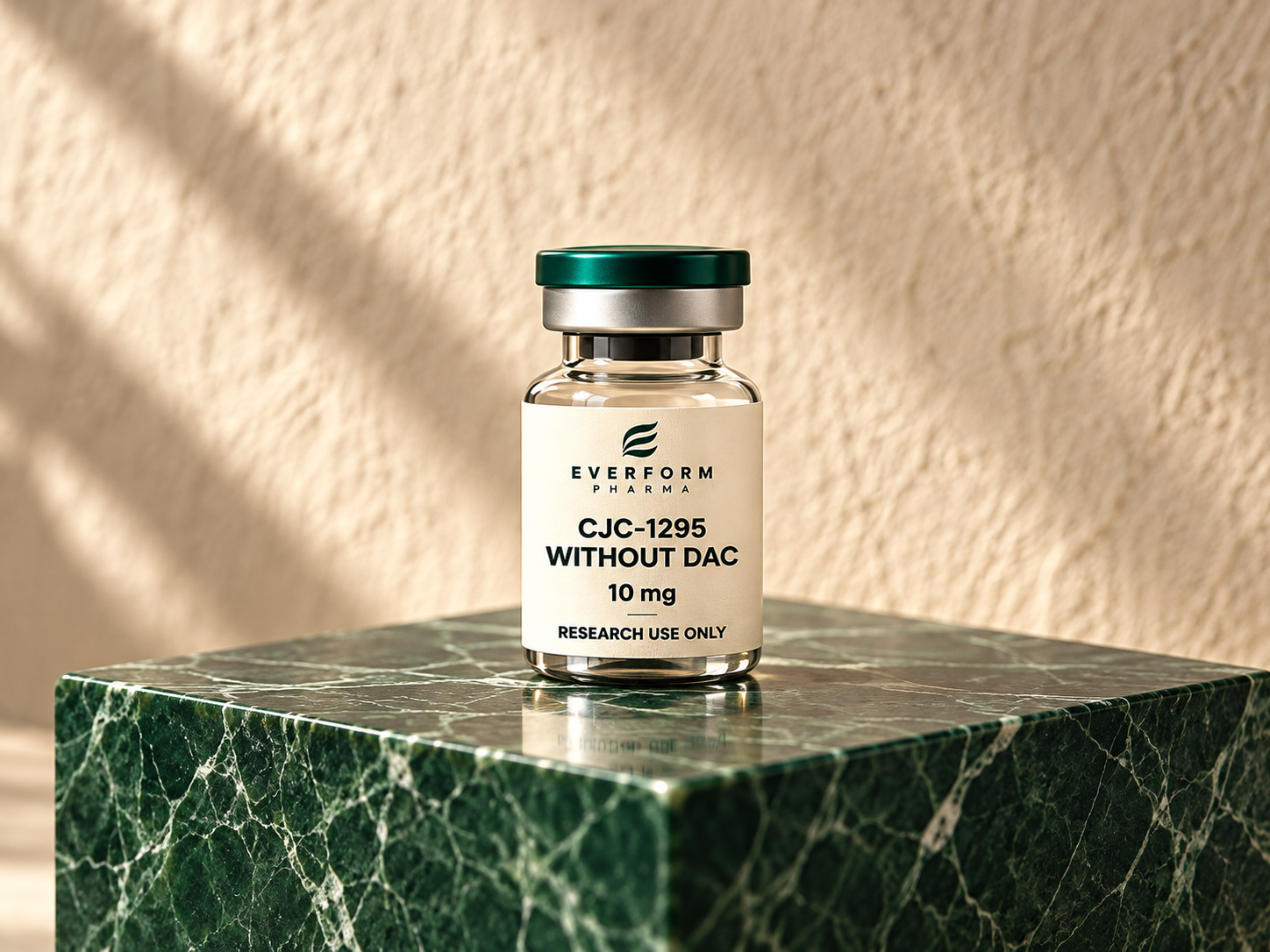
CJC-1295 without DAC
Exploring the signals behind growth hormone release.
Commonly known as modified GRF (1–29), CJC-1295 without DAC is a synthetic analogue of growth hormone-releasing hormone. It offers researchers a tool for investigating pituitary signalling, short-duration growth hormone responses and the interaction between GHRH and ghrelin-receptor pathways.
Its research interest centres on understanding how these signals influence the growth hormone axis—not on established benefits for muscle growth or recovery in humans.
Recovery Research
Studying biological responses to exercise and physical stress, and how recovery outcomes are measured.

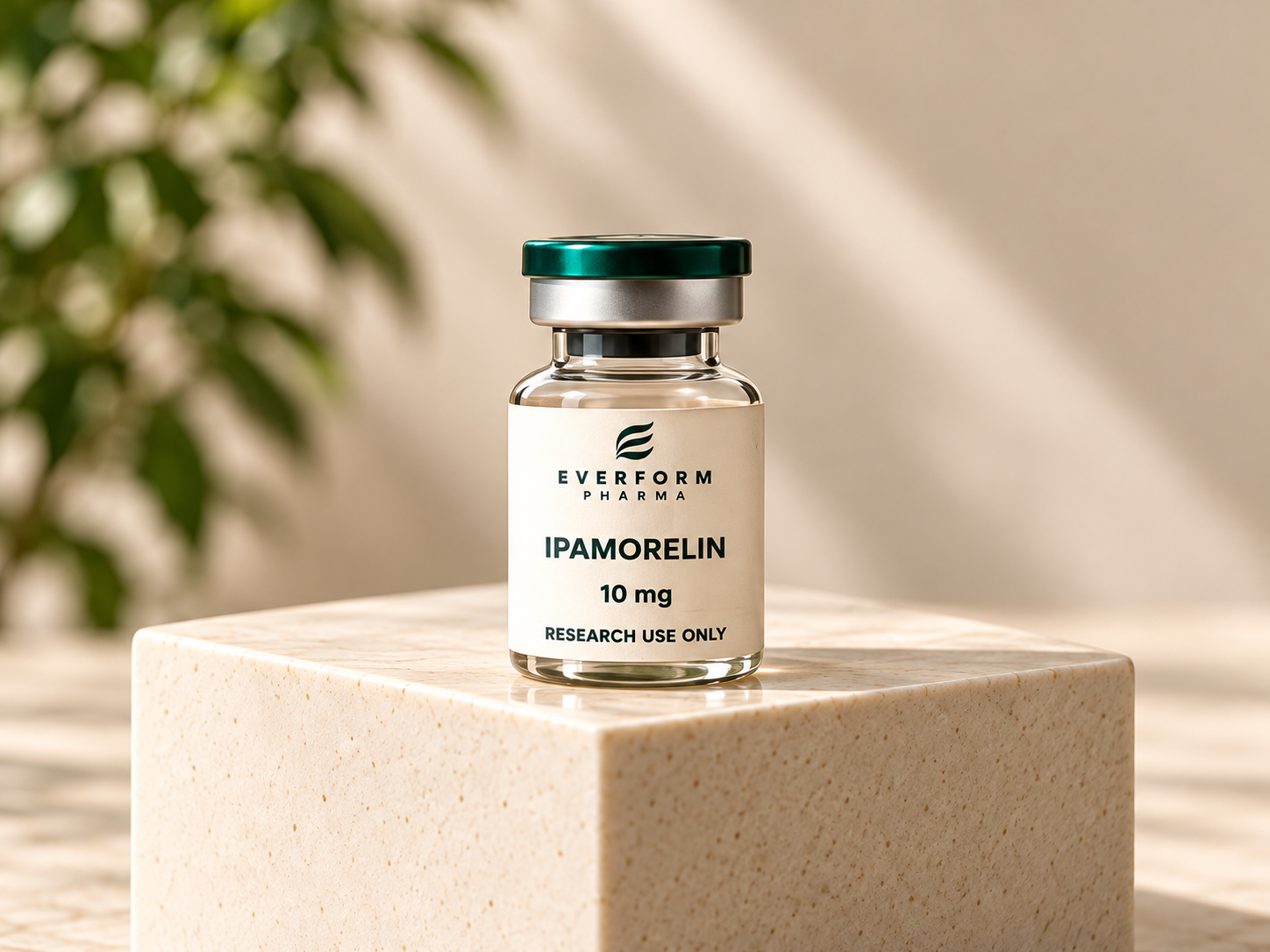
Ipamorelin - Studied for its interaction with the ghrelin receptor and its effects on growth hormone release.
Exploring selective growth hormone release.
Ipamorelin is a synthetic peptide that activates the ghrelin receptor, stimulating growth hormone release. For researchers, it provides a tool for investigating pituitary signalling, the timing and magnitude of growth hormone responses, and differences between growth hormone secretagogues.
Early animal studies demonstrated a relatively selective hormonal response, with less stimulation of ACTH and cortisol than certain older secretagogues. This makes its selectivity an area of scientific interest—not evidence that it is free from adverse effects.
Research into growth hormone release does not, by itself, establish benefits for muscle growth, recovery or sleep in humans.
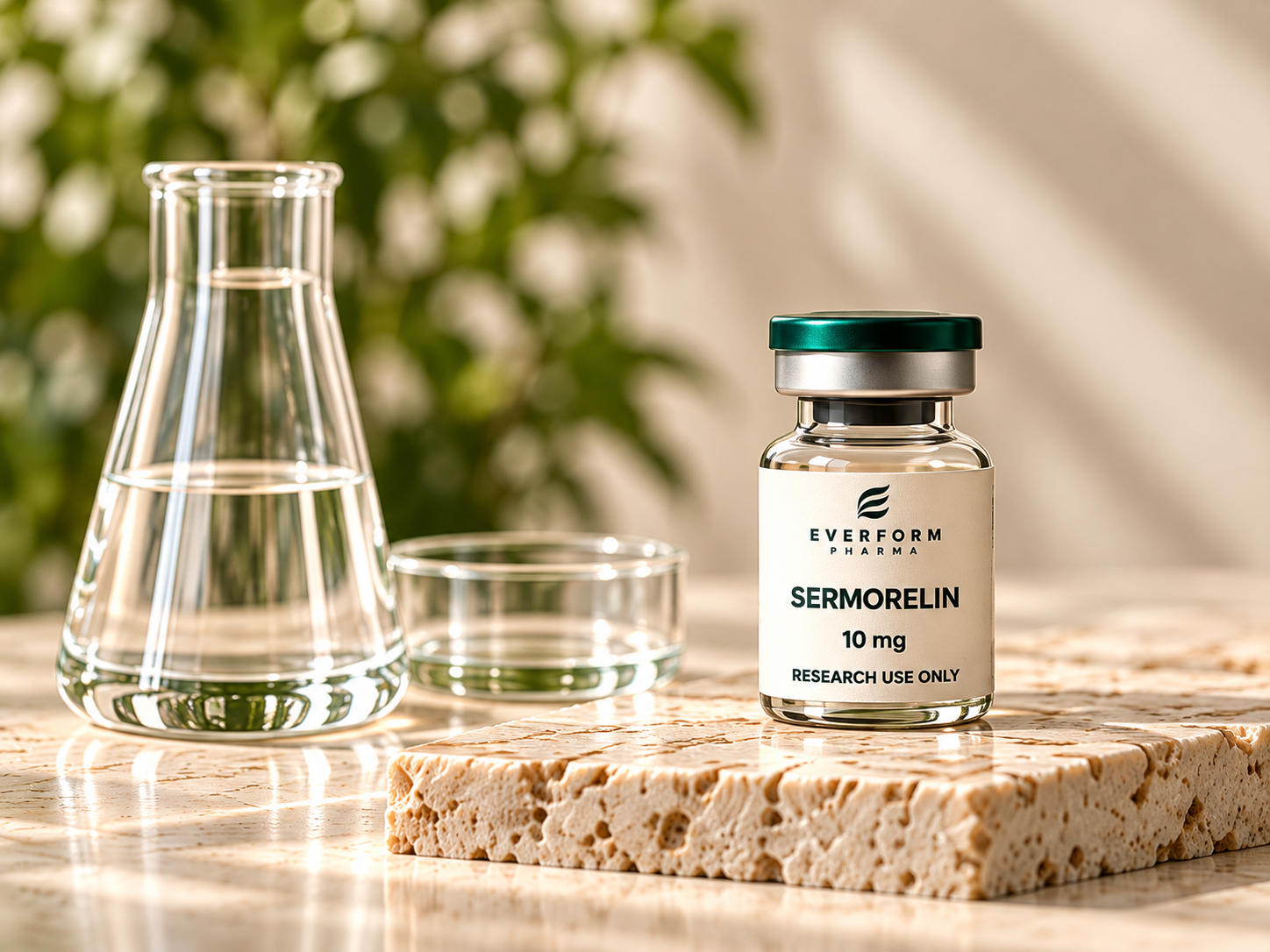
Sermorelin
Investigating the body’s growth hormone signalling.
Sermorelin is a synthetic peptide corresponding to the active 29-amino-acid segment of growth hormone-releasing hormone (GHRH). It offers researchers a tool for exploring how the pituitary responds to GHRH stimulation and how growth hormone release is regulated.
Research applications include examining hormone-response patterns and comparing GHRH-receptor activity with other growth hormone secretagogue pathways. These applications do not establish benefits for muscle growth or recovery in humans.
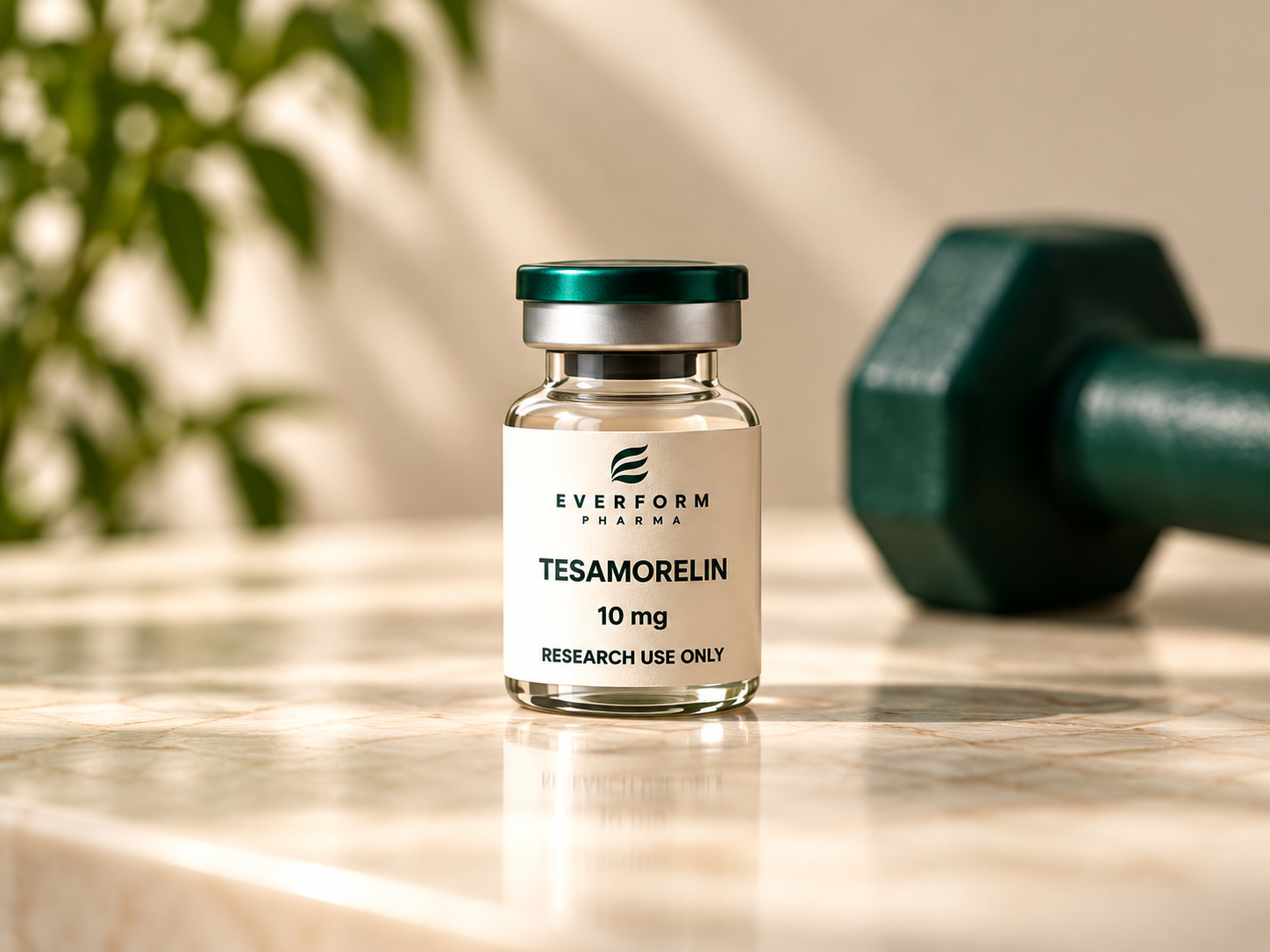
Tesamorelin
Exploring growth hormone signalling and body composition.
Tesamorelin is a synthetic analogue of growth hormone-releasing hormone (GHRH). It offers researchers a tool for investigating pituitary growth hormone release, downstream IGF-1 responses and their relationship with metabolic function.
Its clinical research background provides a foundation for studying abdominal fat and body composition in specific populations. Those findings do not establish muscle-building benefits or equivalent effects for research-use materials.
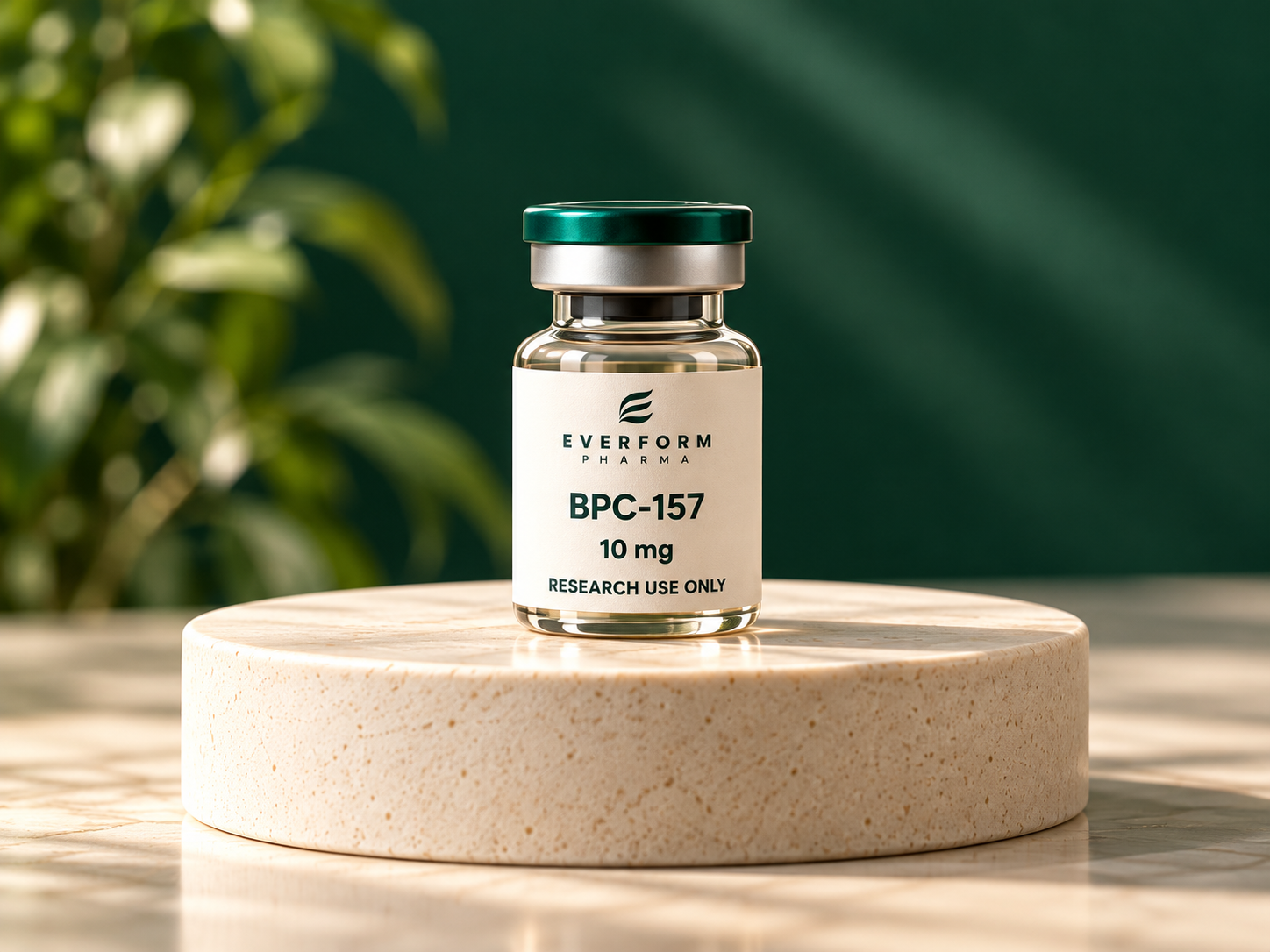
BPC-157
Exploring the biology of tissue repair.
BPC-157 is a synthetic peptide investigated in preclinical models of muscle, tendon, ligament and gastrointestinal injury. Its research appeal lies in exploring the processes behind tissue repair—from cellular responses to changes in tissue structure and function.
For researchers interested in recovery biology, BPC-157 offers a focus for investigating how damaged tissues respond under controlled experimental conditions. Findings remain predominantly preclinical; benefits for human healing, muscle growth or recovery have not been established.

Understanding the Evidence
Hormonal activity alone does not establish muscle growth or improved recovery. Clinical findings cannot be assumed to apply to research-use materials.
Quality & Research Documentation
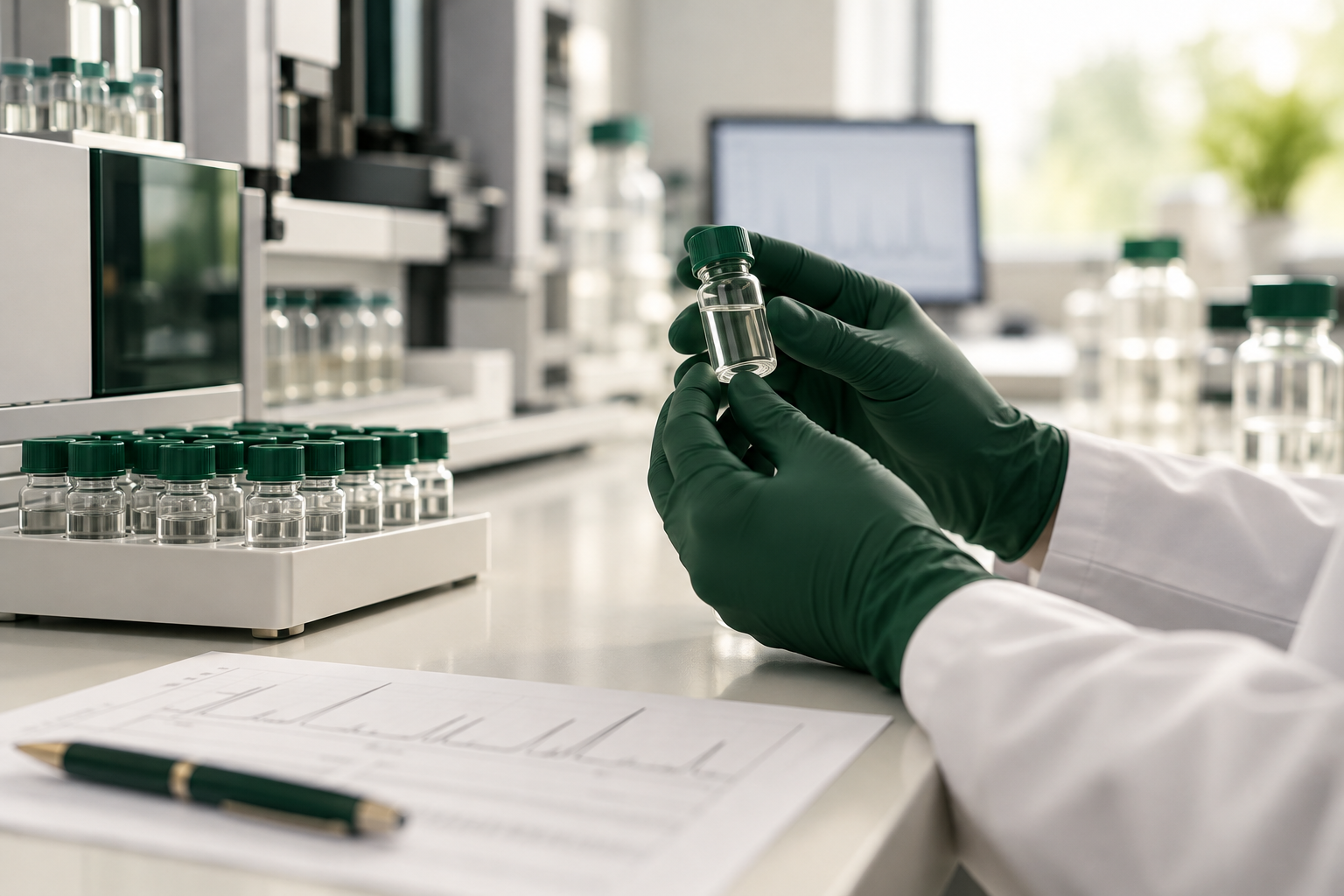
Clear documentation supports informed research decisions. Review molecular identity, batch details, storage requirements and available batch-specific Certificates of Analysis.
Analytical testing provides information about the sample tested. It does not establish clinical safety or suitability for human use.
Frequently Asked Questions
What makes these peptides different?
Ipamorelin acts through the ghrelin receptor, while CJC-1295 without DAC, Sermorelin and Tesamorelin act through growth hormone-releasing hormone pathways.
BPC-157 has a different research focus, centred primarily on tissue responses and repair in preclinical models.
Does stimulating growth hormone mean greater muscle growth?
Not necessarily. A change in growth hormone levels does not, by itself, demonstrate increased muscle mass, strength or improved recovery. These outcomes need to be measured directly in appropriately designed studies.
What does “without DAC” mean?
DAC stands for Drug Affinity Complex, a modification used to extend a peptide’s activity. Products marketed as CJC-1295 without DAC commonly refer to modified GRF (1–29), which differs from the longer-acting DAC form.
Researchers should confirm the precise molecular identity in the product documentation.
Which peptides are discussed together, and why?
Ipamorelin and a GHRH-related peptide—such as CJC-1295 without DAC, Sermorelin or Tesamorelin—are discussed together because they act through different receptor pathways involved in growth hormone release.
This provides a biological rationale for investigating their interaction. It does not establish that any particular combination delivers better muscle growth, recovery or safety in humans.
Is CJC-1295 without DAC plus Ipamorelin the best stack?
There is insufficient robust comparative human evidence to describe this combination as the “best” stack for muscle growth or recovery.
Research showing an enhanced hormonal response from complementary pathways cannot automatically be translated into improved physical outcomes.
Should CJC-1295 without DAC, Sermorelin and Tesamorelin all be combined?
These compounds act through overlapping GHRH pathways. Combining them does not automatically provide complementary effects, and evidence does not establish that using several together improves results.
In research, each additional compound also makes it harder to identify which substance caused an observed effect.
Can BPC-157 be combined with growth hormone-related peptides?
Such combinations are promoted online, but reliable human evidence has not established improved healing, muscle growth or recovery compared with individual compounds. Their combined safety is also insufficiently characterised.
BPC-157’s preclinical tissue-repair findings should not be treated as proof of benefit from a multi-peptide combination.
Does Tesamorelin’s clinical research prove bodybuilding benefits?
No. Findings from specific clinical populations and pharmaceutical formulations cannot be assumed to apply to healthy athletes or research-use products. Changes in abdominal fat are also different from demonstrated gains in muscle strength or performance.
Does a Certificate of Analysis confirm that a combination is safe?
No. A Certificate of Analysis reports the tests performed on a particular sample. It does not establish clinical safety, compatibility between compounds or suitability for injection.
Does Everform Pharma recommend personal-use stacks?
No. Everform Pharma supplies laboratory research materials and supporting documentation. We do not provide personal dosing, administration or treatment protocols.
For laboratory research use only. Not for human or veterinary use.
MUSCLE & RECOVERY RESEARCH
Muscle Growth & Recovery
Exploring growth hormone signalling, tissue maintenance and body composition.
Peptide research investigates the biological pathways associated with growth hormone release, tissue maintenance and changes in body composition.
The science behind the muscle research
Growth Hormone Signalling
Investigating the hormonal pathways involved in growth hormone release and metabolic regulation.
Body Composition
Examining changes in lean mass, fat mass and overall body composition in research settings.
Peptides in Focus
Tissue Maintenance
Exploring biological pathways involved in tissue turnover, maintenance and repair.
Five research compounds. Distinct biological pathways. An evidence-informed perspective.
CJC-1295 without DAC
Exploring the signals behind growth hormone release.
Commonly known as modified GRF (1–29), CJC-1295 without DAC is a synthetic analogue of growth hormone-releasing hormone. It offers researchers a tool for investigating pituitary signalling, short-duration growth hormone responses and the interaction between GHRH and ghrelin-receptor pathways.
Its research interest centres on understanding how these signals influence the growth hormone axis—not on established benefits for muscle growth or recovery in humans.
Recovery Research
Studying biological responses to exercise and physical stress, and how recovery outcomes are measured.
Ipamorelin - Studied for its interaction with the ghrelin receptor and its effects on growth hormone release.
Exploring selective growth hormone release.
Ipamorelin is a synthetic peptide that activates the ghrelin receptor, stimulating growth hormone release. For researchers, it provides a tool for investigating pituitary signalling, the timing and magnitude of growth hormone responses, and differences between growth hormone secretagogues.
Early animal studies demonstrated a relatively selective hormonal response, with less stimulation of ACTH and cortisol than certain older secretagogues. This makes its selectivity an area of scientific interest—not evidence that it is free from adverse effects.
Research into growth hormone release does not, by itself, establish benefits for muscle growth, recovery or sleep in humans.
Sermorelin
Investigating the body’s growth hormone signalling.
Sermorelin is a synthetic peptide corresponding to the active 29-amino-acid segment of growth hormone-releasing hormone (GHRH). It offers researchers a tool for exploring how the pituitary responds to GHRH stimulation and how growth hormone release is regulated.
Research applications include examining hormone-response patterns and comparing GHRH-receptor activity with other growth hormone secretagogue pathways. These applications do not establish benefits for muscle growth or recovery in humans.
Tesamorelin
Exploring growth hormone signalling and body composition.
Tesamorelin is a synthetic analogue of growth hormone-releasing hormone (GHRH). It offers researchers a tool for investigating pituitary growth hormone release, downstream IGF-1 responses and their relationship with metabolic function.
Its clinical research background provides a foundation for studying abdominal fat and body composition in specific populations. Those findings do not establish muscle-building benefits or equivalent effects for research-use materials.
BPC-157
Exploring the biology of tissue repair.
BPC-157 is a synthetic peptide investigated in preclinical models of muscle, tendon, ligament and gastrointestinal injury. Its research appeal lies in exploring the processes behind tissue repair—from cellular responses to changes in tissue structure and function.
For researchers interested in recovery biology, BPC-157 offers a focus for investigating how damaged tissues respond under controlled experimental conditions. Findings remain predominantly preclinical; benefits for human healing, muscle growth or recovery have not been established.
Understanding the Evidence
Hormonal activity alone does not establish muscle growth or improved recovery. Clinical findings cannot be assumed to apply to research-use materials.
Quality & Research Documentation
Clear documentation supports informed research decisions. Review molecular identity, batch details, storage requirements and available batch-specific Certificates of Analysis.
Analytical testing provides information about the sample tested. It does not establish clinical safety or suitability for human use.
Frequently Asked Questions
What makes these peptides different?
Ipamorelin acts through the ghrelin receptor, while CJC-1295 without DAC, Sermorelin and Tesamorelin act through growth hormone-releasing hormone pathways.
BPC-157 has a different research focus, centred primarily on tissue responses and repair in preclinical models.
Does stimulating growth hormone mean greater muscle growth?
Not necessarily. A change in growth hormone levels does not, by itself, demonstrate increased muscle mass, strength or improved recovery. These outcomes need to be measured directly in appropriately designed studies.
What does “without DAC” mean?
DAC stands for Drug Affinity Complex, a modification used to extend a peptide’s activity. Products marketed as CJC-1295 without DAC commonly refer to modified GRF (1–29), which differs from the longer-acting DAC form.
Researchers should confirm the precise molecular identity in the product documentation.
Which peptides are discussed together, and why?
Ipamorelin and a GHRH-related peptide—such as CJC-1295 without DAC, Sermorelin or Tesamorelin—are discussed together because they act through different receptor pathways involved in growth hormone release.
This provides a biological rationale for investigating their interaction. It does not establish that any particular combination delivers better muscle growth, recovery or safety in humans.
Is CJC-1295 without DAC plus Ipamorelin the best stack?
There is insufficient robust comparative human evidence to describe this combination as the “best” stack for muscle growth or recovery.
Research showing an enhanced hormonal response from complementary pathways cannot automatically be translated into improved physical outcomes.
Should CJC-1295 without DAC, Sermorelin and Tesamorelin all be combined?
These compounds act through overlapping GHRH pathways. Combining them does not automatically provide complementary effects, and evidence does not establish that using several together improves results.
In research, each additional compound also makes it harder to identify which substance caused an observed effect.
Can BPC-157 be combined with growth hormone-related peptides?
Such combinations are promoted online, but reliable human evidence has not established improved healing, muscle growth or recovery compared with individual compounds. Their combined safety is also insufficiently characterised.
BPC-157’s preclinical tissue-repair findings should not be treated as proof of benefit from a multi-peptide combination.
Does Tesamorelin’s clinical research prove bodybuilding benefits?
No. Findings from specific clinical populations and pharmaceutical formulations cannot be assumed to apply to healthy athletes or research-use products. Changes in abdominal fat are also different from demonstrated gains in muscle strength or performance.
Does a Certificate of Analysis confirm that a combination is safe?
No. A Certificate of Analysis reports the tests performed on a particular sample. It does not establish clinical safety, compatibility between compounds or suitability for injection.
Does Everform Pharma recommend personal-use stacks?
No. Everform Pharma supplies laboratory research materials and supporting documentation. We do not provide personal dosing, administration or treatment protocols.
For laboratory research use only. Not for human or veterinary use.