
Neuroscience & peptide research
Cognitive Function & Mental Clarity
Exploring the science of learning, neuronal signalling and stress responses.


Learning & Memory
Investigating learning, memory formation and adaptation in experimental models.

Neuronal Signalling
Exploring cell communication and neurotrophic pathways.

Stress Responses
Examining stress-related behaviour and neurotransmission.

Research Quality
Clearly identified materials, appropriate controls and measurable outcomes.
Peptides in focus
Three compounds.
Distinct research questions.
Explore the research profiles of Semax, Selank and Adamax, and the limits of the available evidence.
01 / Research profile
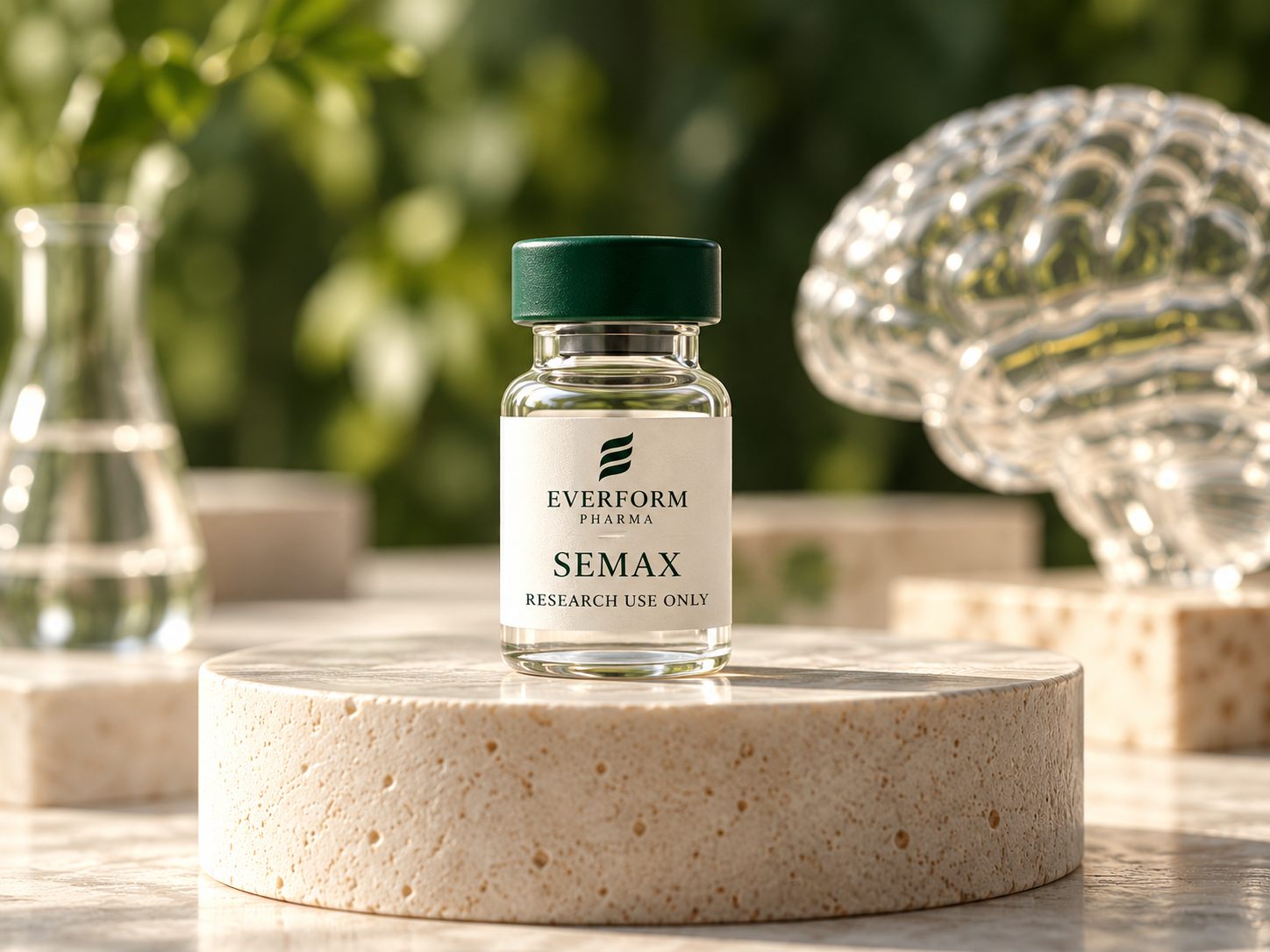
Semax
A window into neurotrophic signalling.
Read the research overview
Semax is a synthetic peptide analogue derived from an ACTH fragment. Its research appeal centres on the pathways involved in neuronal function, adaptation and responses to injury.
Preclinical investigations have examined its relationship with brain-derived neurotrophic factor—BDNF—and associated signalling. For researchers, this creates opportunities to explore how molecular changes relate to behavioural and neurological outcomes.
These findings do not establish improved memory, concentration or cognitive performance in healthy people.

02 / Research profile
Selank
Exploring the connection between stress and brain signalling.
Read the research overview
Selank is a synthetic peptide analogue of tuftsin, investigated for its effects on stress-related behaviour and neurotransmission.
Experimental research has examined changes in genes associated with GABA-related signalling, providing a basis for investigating how peptide activity may interact with the systems involved in neuronal regulation.
Its research interest lies in connecting molecular responses with measurable outcomes—not in assuming that laboratory findings establish relief from anxiety or improved mental performance in humans.
03 / Research profile
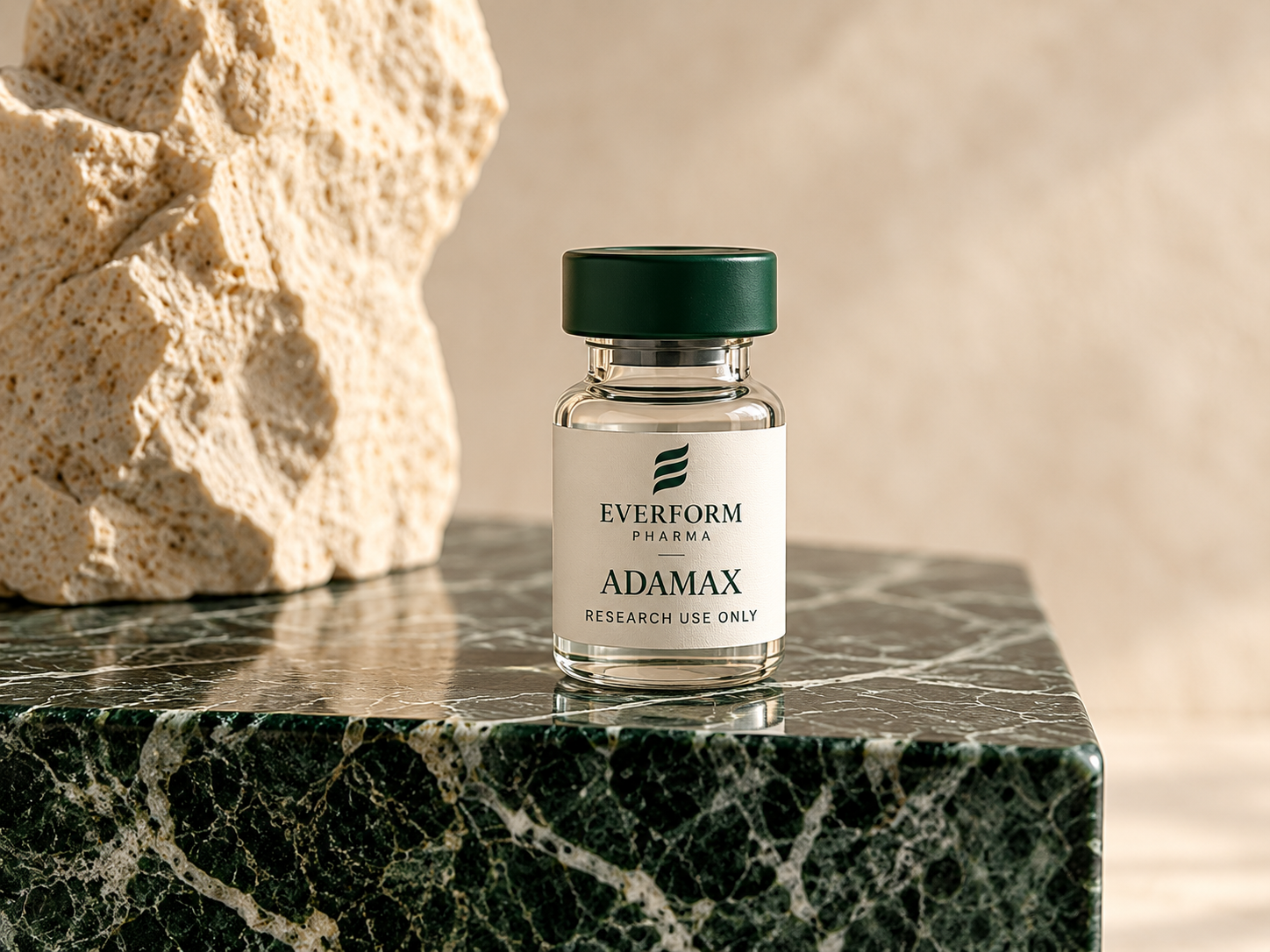
Adamax
An emerging direction in peptide research.
Read the research overview
Adamax is marketed as a modified Semax analogue, attracting interest around questions of molecular design and comparative biological activity.
For researchers assessing this emerging material, the starting point is precise characterisation: confirming its structure, identity and analytical documentation before evaluating any proposed properties.
Published evidence is particularly limited. Claims that Adamax is stronger, longer-lasting or more effective than Semax should not be treated as established findings.
Context matters
Understanding
the evidence
A change in gene expression or neuronal signalling does not, by itself, demonstrate better memory, focus or mood.
Findings depend on the experimental model, formulation and outcomes measured. Laboratory and animal studies cannot automatically be translated into benefits for healthy people.


Quality & transparency
Research starts with clear documentation.
Clear documentation supports informed research decisions. Review molecular identity, batch details, storage requirements and available batch-specific Certificates of Analysis.
Analytical testing provides information about the sample tested. It does not establish clinical safety or suitability for human use.
Your questions
Frequently asked questions
Can these compounds improve memory or focus?
Research has explored pathways relevant to cognition, but reliable evidence does not establish that these research-use products improve memory, concentration or everyday performance in healthy people.
What is the difference between Semax and Selank?
Semax research includes neurotrophic signalling and experimental models of neurological injury. Selank research includes stress-related behaviour and neurotransmission. These different research profiles do not establish that either compound is suitable for a particular person.
Is Adamax proven to outperform Semax?
No robust comparative evidence establishes that Adamax is superior to Semax. Proposed structural advantages require experimental confirmation rather than assumptions based on molecular design.
Can these compounds be combined?
There is insufficient reliable evidence to identify a “best cognitive stack” or establish the safety and effectiveness of these combinations. Different proposed mechanisms do not automatically produce complementary benefits.
Does a Certificate of Analysis confirm safety?
No. A Certificate of Analysis reports the tests performed on a particular sample. It does not establish clinical safety, sterility or suitability for injection.
Are these medicines for cognitive or mental-health conditions?
Everform Pharma research materials are not supplied as medicines for memory problems, anxiety, ADHD or other neurological or mental-health conditions.